

- Choosing between ceramic coating, wax, or sealant isn’t just about picking a product — it’s about making a decision that directly affects the lifespan of your paint, your long-term costs, and your vehicle’s value.
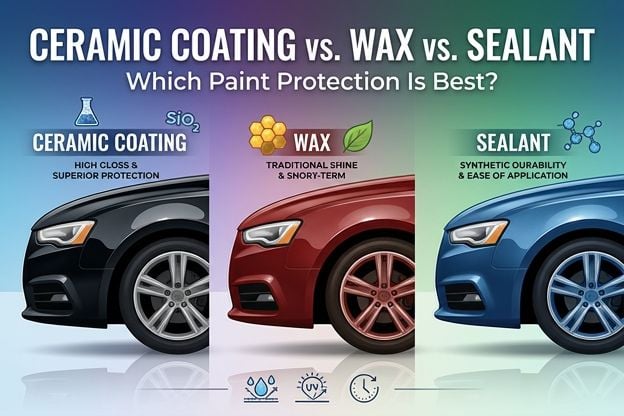
- Car wax lasts 1–2 months, paint sealants last 6–12 months, and professional ceramic coatings can protect your paint for 3–7 years — the difference in long-term cost is significant.
- The DMV’s road salt season, humid summers, and stop-and-go highway traffic create specific paint threats that not all protection products handle equally well.
- You can layer wax on top of a ceramic coating for extra gloss, but you should never apply a ceramic coating over wax — the chemistry doesn’t work that way.
- The Car Shop in Laurel, MD offers IICRC-certified ceramic coating installation with transparent, all-inclusive pricing and protection plans ranging from 3 to 5 years.
Introduction
Your car’s paint is under attack every single day. UV rays, road salt, bird droppings, humidity, tree sap — the list of threats is long, and the damage they cause is cumulative. The question isn’t whether you need paint protection. The question is which kind actually works.
Many car owners tend to use wax because it’s what they’re used to. It’s a typical Saturday afternoon activity, using a foam applicator and enjoying the deep shine it gives. However, just because it’s familiar doesn’t mean it’s the most effective. For many drivers in the DC, Maryland, and Virginia area, wax alone isn’t enough to protect their vehicle from the year-round conditions it faces.
Paint sealants were introduced as a more long-lasting synthetic option, and ceramic coatings have since taken things to a whole new level. Each product functions in its own way, is priced differently, and caters to a different kind of driver. The aim of this guide is to help you understand these differences.
Why Car Owners Make This Common Mistake
The biggest misconception is that all three products are the same — just different versions of the same thing. They’re not. Wax is a surface-level barrier. Sealants chemically bond to your clear coat. Ceramic coatings form a semi-permanent shell. The way they interact with your paint, and the way they fail, are completely different.
Many DMV drivers often forget what their cars have to endure. The harsh winter road salt on I-95, the brutal summer UV exposure in open parking lots around DC, the constant stop-and-go on the Beltway that kicks up debris — these are not mild conditions. A product that works well for a driver in a mild climate may not last a single season here.
There’s also a cost perception problem. Wax feels affordable because the upfront price is low. But reapplying every 4–6 weeks adds up — in product cost, time, and wear on your paint from repeated buffing. Ceramic coatings cost more upfront, but the math often shifts significantly over a 3–5 year period.
What You’ll Learn From This Guide
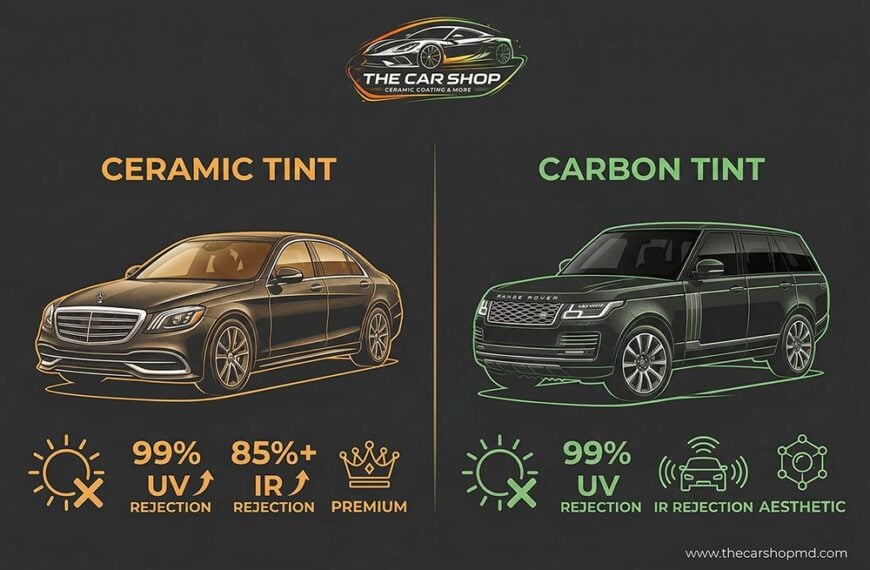
Once you’ve finished reading, you’ll have a straightforward, truthful guide to help you choose the best paint protection for your particular car, lifestyle, and budget. There will be no sales pressure. No unclear comparisons. Just the facts you need to make a confident choice. For those interested in understanding more about vehicle enhancements, you might also explore ceramic tint vs. carbon tint to see which one suits your vehicle best.
Understanding the Basics
Before we dive into the performance of each product, it’s helpful to understand what each product is made of. The differences aren’t just marketing tactics — they’re based on the structure of each product, which explains why each product works the way it does.
Understanding Car Wax (And What It’s Not)
Car wax, especially carnauba wax that comes from the leaves of a palm tree in Brazil, is a natural substance that rests on your paint instead of bonding with it. It fills in tiny surface flaws, reflects light with a warm, deep glow, and forms a thin protective layer between your clear coat and the environment. That’s really helpful. But because it doesn’t bond with the surface, it wears off quickly. Heat speeds up this process, which is why a summer in the DC area can remove a fresh wax job in weeks.
Wax doesn’t harden your paint surface. It doesn’t offer protection against rock chips and only provides minimal resistance to chemical contaminants like bird droppings or road salt brine. It enhances the appearance with limited protective value – not that it’s a bad thing, as long as you know what you’re getting.
Understanding the Bonding Process of Paint Sealants to Your Clear Coat
Paint sealants are synthetic polymer formulas that are designed to cross-link with your clear coat at a molecular level. Unlike wax that simply sits on the surface, a sealant forms a bonded layer that is much more resistant to UV rays, acid rain, detergents, and environmental contaminants. The finish tends to be cleaner and more reflective than carnauba wax, though some car enthusiasts find it slightly cooler or less “warm” in appearance.
Sealants usually last between 6 and 12 months when applied correctly, making them a good option for drivers who want something more durable than wax but aren’t ready to commit to a professional coating. The application process is somewhat involved, especially since surface preparation is important, but it’s definitely doable for a seasoned DIYer.
How Ceramic Coating Differs from Wax and Sealant
Ceramic coating is a liquid polymer, usually made from silicon dioxide (SiO2), that chemically bonds with the factory paint or clear coat of your vehicle to create a semi-permanent, hardened layer. This layer doesn’t wash off, it doesn’t degrade in heat, and it doesn’t need to be reapplied seasonally. You can think of it less as a product you apply and more as a permanent new surface layer for your paint.
A good ceramic coating has far superior hydrophobic properties than wax or sealant. This means that water sheets off instead of beading, making it much harder for road grime and other contaminants to stick to your surface. This makes maintenance washes quicker and easier, and the best part is that the coating keeps working even when you’re not thinking about it.
The Most Common Misunderstanding About Paint Protection Products
It’s a common belief that the more product you use — layering wax on top of sealant on top of coating — the more protection you get. But the truth is a bit more complex. You can put a wax or spray detailer on top of a cured ceramic coating for added shine, and some coatings are specifically made to accept toppers. However, if you apply a ceramic coating on top of wax, it won’t bond to the paint — it will bond to the wax, which will then peel off the surface, taking the coating with it.
Ceramic coatings require thorough surface prep. The paint must be clean, decontaminated, and often corrected before applying the coating. Any scratches, swirl marks, or oxidation present during application will be trapped beneath the coating. That’s why it’s crucial to have an IICRC-certified technician professionally install it — not for the sake of formality, but to truly ensure quality.
Advantages / Why It’s Important
Protective products aren’t just for aesthetics. They directly influence how your paint holds up over years of daily use, how much your vehicle is worth when you decide to sell it, and how much time and money you spend on upkeep. Over time, the correct selection will accumulate in your favor. For a complete guide on protective products, check out ceramic coating and its benefits.
How Each Product Stands Up to UV Rays, Heat, and Road Salt
The Importance of Hydrophobicity and Water Beading
Water beading is often seen as a fun visual effect — a sign that your product is doing its job. But it’s more than just a cool trick. When water quickly runs off your paint, it takes contaminants with it. Road dirt, mineral deposits, pollen, and industrial fallout all need time on your surface to do their damage. A coating that quickly gets rid of water is also getting rid of the harmful things in that water. For more information on how coatings protect your vehicle, check out our complete guide on ceramic coating.
Here are the key differences between wax, paint sealants, and ceramic coatings:
- Wax provides a light water beading effect that fades within weeks as the product wears off
- Paint sealants offer a stronger, more consistent beading effect that lasts up to 12 months before needing to be reapplied
- Ceramic coatings create a self-cleaning hydrophobic effect that actively repels water, mud, and surface contaminants at a level that wax can’t compete with
- Even after repeated wash cycles and seasonal temperature changes, a cured ceramic coating maintains its hydrophobic properties
In the DMV, where summer humidity causes paint surfaces to remain damp for long periods and spring pollen covers everything in a sticky film, that self-cleaning effect isn’t just a luxury — it’s genuinely practical. Less contamination bonding to the surface means fewer aggressive wash cycles, which means less mechanical wear on your clear coat over time.
When it comes to being hydrophobic, the difference between a new wax job and a professionally applied ceramic coating is noticeable the first time it rains. The difference is even more noticeable when you look at the condition of the paint after three to five years.
How Paint Condition Affects Resale Value
The paint job is one of the first things someone looks at when considering buying a car. If the clear coat is faded, there are swirl marks, or there is oxidation, it’s a clear sign that the car hasn’t been well-maintained. This can significantly decrease the car’s perceived value and the price it can be sold for. Regularly protecting the paint throughout the car’s life is one of the best investments a car owner can make in terms of return on investment.
Wax is great for making your car look shiny and new in the short term, but it doesn’t do much to protect the actual paint on your car. Every time you apply wax, you’re lightly scratching the surface of your car, and over time, this can add up. With a ceramic coating, you don’t have to worry about this because the paint on your car is protected and the coating takes the brunt of the environmental damage.
Used cars that have a record of ceramic coating — particularly professionally applied coatings that come with transferable warranties — have a real edge on the used car market. This tells buyers that the previous owner took care of the car in a thorough way, not just in terms of its looks.
Choosing Between Options
The best paint protection for you depends on four factors: how long you want it to last, your budget, how much time you’re willing to put into maintenance, and how much you care about the vehicle. Here’s a comparison of the three options on each of these factors.
Comparing Durability: 1 Month vs. 12 Months vs. 7 Years
Pure carnauba wax will last you 4–8 weeks under normal conditions. But if you live in a place with a DMV summer, where surface temperatures on a black hood can go over 150°F, that timeline gets shorter. You’ll have to reapply it every month if you want to keep your car protected, which means you’ll be applying it 12 or more times a year just to keep a basic level of coverage.
Paint sealants can last anywhere from 6–12 months, and some of the higher-end formulas can last up to 18 months with the right upkeep. A professionally applied ceramic coating can last between 3–7 years. The Car Shop offers 3-year and 5-year protection plans for its ceramic coating packages, providing you with a warranty-backed timeframe instead of a rough estimate. For more details on what is ceramic coating and its benefits, check out our complete guide.
Breaking Down the Cost: What You’re Really Paying For
Wax seems inexpensive — a good carnauba product is $15–$40 per can. But if you apply it 12 times a year and factor in the time each application takes, the cost adds up. Paint sealants are more expensive per application ($30–$80) but you don’t need to apply them as often. Ceramic coatings have a higher initial cost, but if you spread that cost over a 5-year protection period — with no need to reapply — the annual cost is often less than the other options. At The Car Shop, the price includes everything: parts and labor, no hidden costs, no unexpected charges when you pick up your car.
What’s the Best Fit for Your Lifestyle – Daily Driver, Show Car, or Off-Road?
| Type of Vehicle | Best Fit | Reason |
|---|---|---|
| Daily Driver | Ceramic Coating | Set-and-forget protection that can handle constant exposure to the environment without the need for monthly maintenance |
| Weekend / Show Car | Ceramic + Wax Topper | The coating provides the base; carnauba wax on top adds a competition-level depth and warmth |
| Leased Vehicle | Paint Sealant | Strong mid-term protection without the cost of a long-term coating for a car you won’t keep |
| Off-Road / Work Truck | Ceramic Coating or PPF | High-contact surfaces require hardened protection; ceramic can handle chemical exposure while PPF can handle physical impact |
Daily drivers in the DMV area consistently find the most value in ceramic coatings. The Beltway, I-270, and I-95 corridors are constantly exposed to debris — gravel, truck spray, construction runoff — and a hardened ceramic layer handles that much better than a wax film that’s already half-worn by Wednesday.
Many show car owners use a combination of ceramic coating as the long-term base, and then apply a thin layer of carnauba wax before shows to give the car that warm, liquid glass look that synthetic products have a hard time matching. This is one of the few instances where layering is actually a good idea — wax on top of a fully cured coating is okay, and some coatings are actually made to accept it.
When you’re trying to decide between ceramic coating and paint protection film, remember that PPF physically soaks up impact while ceramic deals with chemical and UV threats. For the best coverage, a lot of car enthusiasts use PPF on high-impact areas — like the hood, front bumper, mirrors — and then apply ceramic coating to the rest of the car.
Is It Possible to Apply Wax Over a Ceramic Coating?
Yes, and it works well. A fully cured ceramic coating provides a solid, hardened base that carnauba wax can sit on top of without any problems. You get the durability and hydrophobic performance of the coating underneath, with the warm optical depth of carnauba on top. What you can’t do is reverse the order. Applying a ceramic coating over wax means the coating bonds to the wax layer, not the paint, and it will shed when the wax breaks down. Surface preparation — including full decontamination and wax removal — is a must before any ceramic application.
Location Matters
What works best to protect your car’s paint doesn’t just depend on the product itself, but also where you live and drive. The DMV region has its own set of unique conditions that can affect how well these products work and how long they last.
How Weather in DC, Maryland, and Virginia Affects Paint Protection
The DC metro area has a full range of weather — humid summers that speed up the chemical bonding of contaminants to paint, cold winters with freezing rain and snow, and a spring pollen season that covers vehicles in an acidic film within hours of a wash. Wax breaks down fastest in high heat and humidity, which means the two worst months for wax durability are June and July — exactly when your car needs coverage most. Ceramic coatings are designed to maintain performance across these temperature swings, keeping their hydrophobic properties from a January freeze to an August heat wave.
Winter in the DMV: Why Road Salt Matters
Road salt is heavily used in Maryland, Virginia, and DC from the end of November to the beginning of March. Sodium chloride doesn’t just cause rust on exposed metal — it also directly attacks clear coat, speeding up oxidation and causing the dull, chalky surface damage that’s costly to fix once it sets in. Wax doesn’t offer much resistance to salt brine; the ionic chemistry of road salt actively breaks down carnauba wax on contact. Paint sealants hold up better but still degrade under sustained salt exposure. A professionally applied ceramic coating creates a chemically resistant barrier that doesn’t react with salt, keeping the clear coat underneath fully protected through the entire winter season. If you’re considering your options before salt season hits, explore The Car Shop’s ceramic coating services to see what a full installation includes.
UV Exposure and Outdoor Parking in DC in Summer
In the DC area, surface UV intensity reaches its peak from May to September. Vehicles parked outdoors in open lots near federal buildings, street parking in Arlington or Bethesda, or uncovered spots throughout Prince George’s County are exposed to the direct sun for hours each day. UV radiation breaks down clear coat at the molecular level, leading to oxidation, color fade, and eventually the peeling and chalking that necessitates paint correction. Car wax offers almost no significant UV protection once it begins to deteriorate, typically within 30–45 days in direct summer sun. Ceramic coatings, on the other hand, block UV at the coating layer, preserving the clear coat and underlying paint color for years rather than weeks.
Trust in the Professionals
Choosing the right product is only half the battle. The other half is who applies it. If a ceramic coating is applied over contaminated or scratched paint, or if the paint isn’t properly prepped, the coating will fail prematurely. In some cases, it can even seal in damage that will cost more to fix than the coating itself. Having a professional install the ceramic coating isn’t just for convenience. When it comes to ceramic coatings, the difference between a professional installation and a DIY job can be the difference between a coating that lasts for 5 years and one that barely makes it 5 months.
Why IICRC-Certified Application Matters for Ceramic Coatings
The Institute of Inspection, Cleaning and Restoration Certification (IICRC) sets the industry standard for surface care, decontamination, and coating application. Technicians who are IICRC-certified have been trained on proper surface prep protocols, coating chemistry, and application technique. These three variables determine whether a ceramic coating will perform as intended or peel away prematurely.
What it actually means to prepare a car for ceramic coating, according to IICRC-certified professionals:
It’s important to note that a professional installation isn’t a quick, in-and-out process. The vehicle is first thoroughly washed and then decontaminated with a clay bar to remove any bonded contaminants on the surface. If there are any swirl marks, scratches, or oxidation, these are corrected before the coating is applied. The paint surface is then wiped down with an IPA (isopropyl alcohol) solution to remove any remaining oils or residues. Only after all these steps have been completed is the coating applied. This is done in a controlled environment, with thin, even passes, and left to cure without interference. Any step that is rushed or skipped could compromise the bond.
At The Car Shop in Laurel, MD, each ceramic coating installation is performed by IICRC-certified technicians who strictly adhere to this full preparation protocol. We don’t take shortcuts, and we back up our results with a written warranty, not just a verbal promise. If you’re curious about the benefits, you can learn more about what ceramic coating is and if it’s worth it.
This is particularly relevant for DMV drivers who bring in vehicles with existing road salt damage, swirl marks from automated car washes, or UV oxidation from years of parking outdoors. These problems need to be addressed before the coating is applied. If a technician skips this step, they’re selling you a coating, not paint protection.
Being certified also implies being accountable. If a technician holds IICRC credentials, their work is held to a written standard. If something doesn’t work as expected, there’s a system in place to figure out why and fix it — instead of just a shrug and a discussion about a refund.
3-Year and 5-Year Ceramic Coating Warranties from The Car Shop
The Car Shop provides ceramic coating packages that come with 3-year and 5-year protection plans, both supported by written warranties with explicit terms. The warranty includes coating performance – hydrophobic function, UV protection, and surface bond integrity – for the length of the plan. When you purchase a 5-year coating, you’re not wondering if it will last. You have documented coverage that holds the installer accountable. This is a significant contrast from a DIY kit with a manufacturer’s guarantee and no recourse if it fails in the eighth month. To understand more about the differences between ceramic coating, wax, and sealant, explore further comparisons and insights.
Clear Costs and No Surprises
At The Car Shop, every ceramic coating package is priced to include everything you need — surface preparation, decontamination, coating application, and labor. There are no surprises when you pick up your vehicle. No “preparation fee” added after you receive your estimate. The price you’re quoted is the price you pay, and it reflects everything that goes into a proper installation. For drivers comparing options across the DMV, this all-inclusive model makes it easy to evaluate the real value, rather than comparing a low quote that increases significantly once preparation costs are added.
Final Thoughts & Next Steps
When it comes to the ceramic coating vs. wax debate, the best choice depends on your specific needs and wants for your car’s paint protection. Wax is a great choice for those who want a quick shine and don’t want to commit to a long-term solution. Paint sealants are the perfect middle ground for those who want a more durable solution but don’t want to have to go through a professional installation. Ceramic coatings are the best long-term solution — they are harder, offer better protection, are more hydrophobic, and are ultimately more cost-effective over a longer period of time.
If you’re a driver in DC, Maryland, or Virginia, the scale is likely tipped in favor of ceramic coating due to the harsh road salt winters, UV-heavy summers, and daily highway exposure. The conditions in these areas are tough, and your chosen form of protection should be able to handle them.
When you’re ready to protect your paint the right way, The Car Shop’s IICRC-certified team is ready to walk you through every option, explain the prep process, and install a coating backed by a warranty you can actually rely on. Visit The Car Shop’s ceramic coating and paint correction services page to see full package details and current pricing.
FAQ Section
Here are the answers to the most frequently asked questions about ceramic coating, wax, and paint sealants by DMV car owners, written in a simple and easy-to-understand manner to help you make an informed decision.
How does the longevity of ceramic coating compare to that of wax?
When compared to wax, ceramic coating has a significantly longer lifespan. A ceramic coating that has been professionally applied will generally last between 3 and 7 years, depending on the product tier and maintenance routine. Car wax, on the other hand, typically lasts between 4 and 8 weeks under normal conditions — and often less during DMV summers when the heat and humidity can accelerate breakdown. The Car Shop offers ceramic coating packages that include 3-year and 5-year protection plans, providing you with durability that is backed by a warranty, rather than an estimate.
Is Ceramic Coating Worth the Cost for a Daily Driver?
For most daily drivers in the DMV, yes — ceramic coating is worth the investment. Here’s how to evaluate it for your own vehicle:
- Calculate what you currently spend annually on wax, sealant, and detail products
- Factor in the time cost of monthly or seasonal reapplication
- Consider the paint correction cost if oxidation or swirl damage develops from inadequate protection
- Compare the resale value difference between a vehicle with protected paint versus one showing clear coat wear
- Divide the ceramic coating installation cost across the 3–5 year warranty window for a true annual cost comparison
Daily drivers take on constant environmental exposure — UV, road grime, bird droppings, salt spray, and debris. A ceramic coating handles all of it passively, without requiring you to schedule reapplication or babysit your maintenance calendar.
When comparing the cost of ceramic coating to the consistent cost of wax and sealant, you’ll typically break even within the first two years if you were already maintaining your paint protection. After that, you’re just getting value from your ceramic coating.
If you’re in the habit of leaving your car parked outside in DC, Bethesda, Silver Spring, or anywhere along the I-95 corridor in Maryland or Virginia, you should seriously consider ceramic coating. The local weather conditions can be surprisingly tough on paint, and many drivers don’t realize just how damaging they can be until it’s too late.
Is it Possible to Apply Paint Sealant Over a Ceramic Coating?
It’s generally not advised to apply a conventional paint sealant over a cured ceramic coating, as it usually won’t bond properly. Ceramic coatings are meant to be the top protective layer — their water-repelling surface actually pushes away the polymers in a sealant, stopping it from adhering correctly. However, you can apply a ceramic-compatible spray topper or a thin layer of carnauba wax over a ceramic coating, as these are designed to work with the coating’s chemistry rather than against it. Always check compatibility with your specific coating product or ask your installer before adding any toppers.
How Often Should I Wax My Car in Maryland?
Waxing Schedule for Cars in Maryland:
For those living in Maryland, maintaining your car’s shine and protection is crucial. Understanding the difference between ceramic coating, wax, and sealant can help you decide how often to wax your car. Weather conditions and driving habits are key factors in determining the frequency of waxing.
Considering Maryland’s intense seasonal changes — the roads are salted from November through March and UV rays are strongest from May through September — you’ll need to apply wax to your car at least four times a year to keep it adequately protected. Many detailing professionals in the DMV recommend waxing six times a year for cars that are parked outside. For those interested in more durable protection, you might explore ceramic coating as an alternative.
Realistically, you should be waxing your car every 4–6 weeks if you want to ensure constant coverage. This means that a driver in Maryland who is dedicated to protecting their car’s paint through wax alone would need to wax their car 8–12 times per year. Each time you wax your car, you need to properly prepare the surface for it to be effective. This means that waxing your car is a significant time commitment.
It’s essential to pay attention to the road salt season. If you apply wax in late October before the salt season begins, it will degrade significantly by December. This leaves your paint exposed during the year’s most intense chemical threat period. You’ll need to reapply the wax in the middle of winter on a clean, warm day. The surface temperature should generally be above 50°F for the wax to cure properly. This reapplication is necessary to maintain coverage through February and March.
If you think that schedule is too much, applying a paint sealant twice a year, once in the fall and once in the spring, provides more reliable coverage with less effort. And if you don’t want to think about it at all, a ceramic coating completely eliminates the need for seasonal scheduling.
Does The Car Shop Provide Paint Correction Prior to Ceramic Coating?
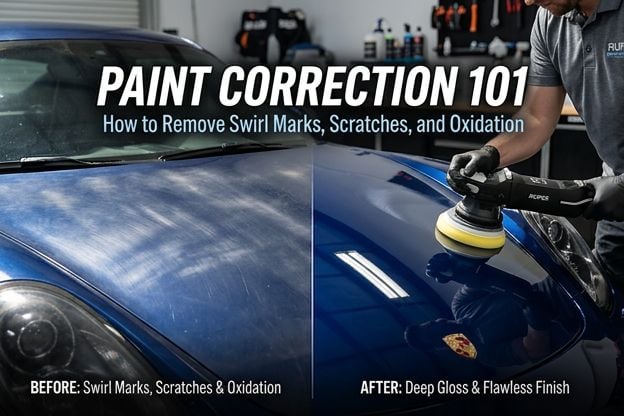
Indeed. The Car Shop offers paint correction, which is often recommended — or even necessary — before installing a ceramic coating, depending on the current state of your paint. Applying a ceramic coating over swirl marks, scratches, or UV oxidation permanently seals in those flaws. Correcting the paint beforehand ensures that the coating is preserving a clean, polished surface instead of damage.
At The Car Shop, IICRC-certified technicians perform paint correction. They use machine polishing to remove surface defects from the clear coat. Depending on the severity of the correction needed, this may be a one-stage or two-stage process. Your technician will assess the paint under inspection lighting and walk you through exactly what correction your vehicle needs before making any recommendations.
Paint correction and ceramic coating are two services that are meant to work together as a complete paint restoration and protection package. Many customers who come in for a ceramic coating find out during the prep inspection that light correction will significantly improve the final result, and they decide to add it as part of the same appointment. For those wondering about the benefits and longevity of such services, you can read more about what ceramic coating is and if it’s worth it. You can find more information on The Car Shop’s paint correction and ceramic coating services page.
- One-stage paint correction gets rid of light swirl marks and scratches on the surface
- Two-stage correction takes care of deeper scratches, heavy swirling, and the early stages of oxidation
- Correction work is always done before the coating is applied, never after
- After correction, the surface is decontaminated and wiped with an IPA solution before the coating is applied
- The ceramic coating then seals and protects the corrected surface for the length of your chosen warranty plan
If your paint has visible swirl marks, water spots that can’t be washed off, or a dull look despite regular washing, you should correct the paint before coating. If you skip this step and go straight to coating, you will seal in those imperfections. No matter how well the coating performs, it can’t fix what’s underneath it.
Want to give your car’s paint job a long-lasting ceramic coating? Schedule your appointment at The Car Shop. Visit thecarshopmd.com/book-now or call (240) 929-7704. We also accept walk-ins when we have open slots.

 By
By