
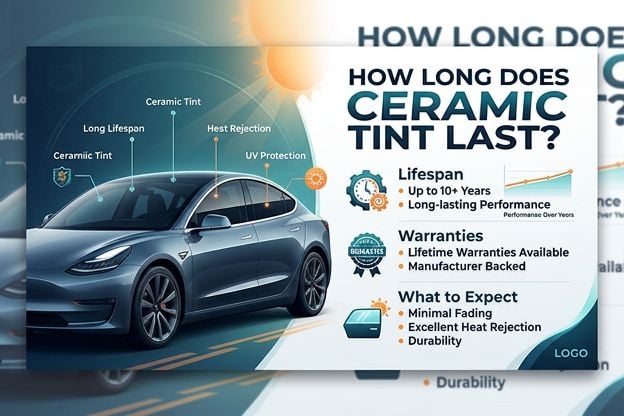

- Ceramic window tint can last 20 years or more when professionally installed — far outlasting dyed and carbon films.
- The ceramic particles embedded in the film don’t degrade under UV exposure, which is the core reason the lifespan is so dramatically different from budget films.
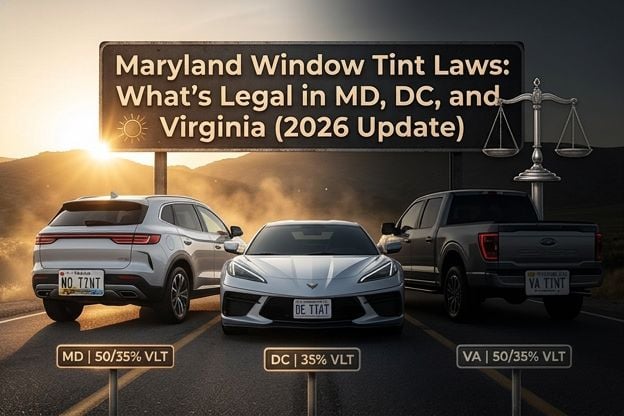
- Maryland, Virginia, and DC each have different legal tint limits — knowing them before you install can save you from a failed inspection or a fine.
- Warranty coverage is one of the clearest indicators of film quality — and UVIron film, installed at The Car Shop, comes with a lifetime warranty.
- Professional installation isn’t just about appearance — improper application is the number one reason tint fails years before it should.
Most people assume window tint is window tint. You pick a shade, someone sticks it on your windows, and you move on. That assumption is exactly why so many drivers end up with bubbling, purple-tinted film two or three years after installation — frustrated, out of money, and starting the process all over again.
Ceramic tint is a completely different product, and its lifespan shows that. At The Car Shop in Laurel, MD, we work with car owners in DC, Maryland, and Virginia who want a window tint that will last, not just for the first summer.
People Are Often Surprised at How Long Ceramic Tint Lasts
Most people don’t realize how big the lifespan gap between different types of film is. Budget dyed films start to break down in as little as five years. But ceramic film, when it’s installed correctly, can still be working at full capacity twenty years later. This isn’t just a marketing claim – it’s due to how the film is engineered at the molecular level.
How Long Can You Expect Ceramic Window Tint to Last?
Under normal driving conditions, ceramic window tint usually lasts between 20 to 25 years. When the vehicle is kept in a garage, properly maintained, and not exposed to the sun for long periods, some installations can last even longer. When you compare this to dyed film, which fades, bubbles, and loses its heat-rejection properties within five to ten years, it quickly becomes clear why ceramic window tint is the better value.
Ceramic film is so durable because of its unique composition. Rather than using dyes that deteriorate under UV radiation, ceramic film is made with nano-ceramic particles. These are small, non-metallic, non-conductive ceramic compounds that remain stable under heat and sunlight. They don’t fade or change color, and they don’t lose their ability to block heat over time.
Comparing Ceramic Tint to Dyed, Carbon, and Metalized Films
| Type of Film | Typical Duration | Stability Against UV Rays | Heat Rejection | Interference with Signals |
|---|---|---|---|---|
| Dyed Film | 5–10 years | Poor | Little | None |
| Carbon Film | 15–20 years | Average | Good | None |
| Metalized Film | 10–15 years | Good | Very Good | Yes |
| Ceramic Film | 20–25+ years | Excellent | Excellent | None |
Carbon film is a decent middle-of-the-road choice, offering decent longevity and heat rejection without the signal interference that comes with metalized film. However, it still relies on carbon particles that can degrade faster than ceramic compounds, especially in high-UV environments. If you’re parking outside every day in a DMV summer, that difference in UV stability matters.
Why Ceramic Particles Don’t Degrade Under UV Exposure
Ceramic compounds are chemically stable. Unlike organic dyes, they don’t have molecular bonds that UV radiation can break down over time. This is the same reason ceramic materials are used in aerospace, medical implants, and industrial applications where stability under extreme conditions is a must. In window film, that same stability translates directly into decades of consistent performance rather than a product that slowly degrades every time the sun rises.
The Basics
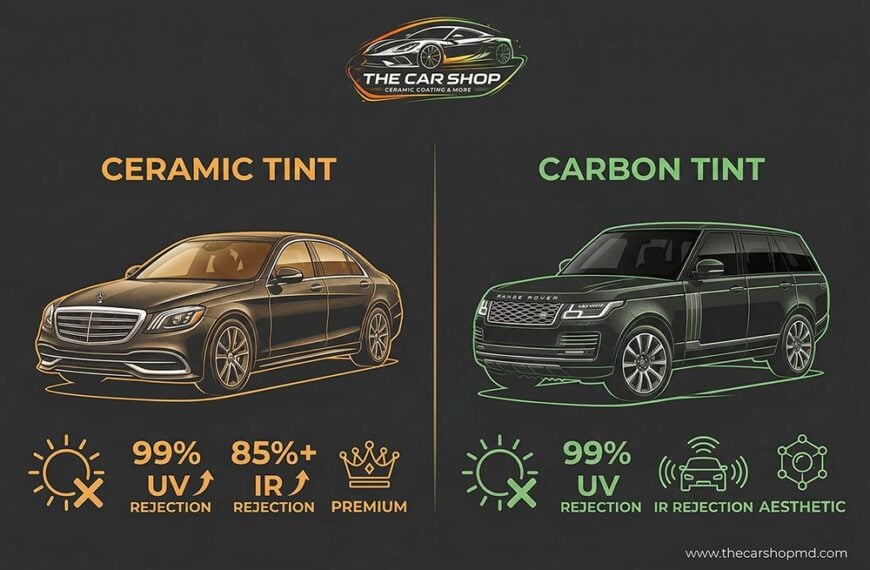
Knowing the ins and outs of ceramic tint— not just its advertised benefits — will assist you in making a more informed purchase and give you a better idea of its longevity on your car. For a deeper understanding, you might want to explore the differences between ceramic tint vs. carbon tint to see which one is right for your vehicle.
What Sets Ceramic Tint Apart From Other Tints
Ceramic window tint is made up of multiple layers. The visible tint layer has nano-ceramic particles that are suspended in a carrier that is optically clear. Underneath that layer is a coating that is resistant to scratches, a layer of adhesive that is designed for long-term bond strength, and a mounting liner that is removed during the installation process. Each layer has a purpose, and the quality of each layer affects the lifespan of the film.
The nano-ceramic particles are the real heroes here. They block infrared radiation, which is the part of sunlight that causes heat, without the need for metal layers that can mess with GPS, Bluetooth, or cell signals. This is a big deal if you drive a newer car that has a lot of driver-assist tech, wireless CarPlay, or a dashcam system that talks to your phone.
Professional Application of Ceramic Tint
When getting your windows professionally tinted, the first step is a thorough cleaning of the glass. This is important because any dirt or other contaminants that get trapped under the film can cause it to fail prematurely. The film is then cut to the exact dimensions of your vehicle’s windows, applied while wet, and squeegeed flat to remove any air bubbles and excess moisture. The film needs to cure for 72 to 96 hours without exposure to moisture in order to reach its full bond strength.
The Most Common Misunderstanding About Ceramic Tint Lifespan
The biggest misconception people have is that if they purchase a high-quality film, it will last a long time. While the quality of the film is important, the quality of the installation is just as important. A high-end ceramic film that is poorly installed — with debris trapped underneath, uneven adhesion, or improper curing — will fail years earlier than it should. This is why it is not optional to choose a certified installer if you want the product to last as long as it is supposed to.
Why Ceramic Tint Matters
Ceramic tint isn’t just about how long it lasts. The benefits it provides over its lifetime make the initial cost worth it — and those benefits don’t decrease as the tint gets older like they do with less expensive options.
Motorists who switch from dyed film to ceramic tint practically always notice the difference right away. The interior of the car stays cooler. Glare is minimized without impeding visibility. And the film looks just as good in year fifteen as it did on the first day.
Heat Rejection That Lasts Even After Years of Sun Exposure
- From the moment it’s installed, ceramic film blocks up to 99% of UV radiation
- Premium ceramic products can reject more than 80% of infrared heat
- The film’s performance levels remain consistent throughout its entire lifespan
- Unlike dyed films, ceramic films do not gradually degrade in their heat-blocking capability
For drivers in the DMV area who endure summers of stop-and-go traffic on the Beltway or I-95, sustained heat rejection is not a luxury. It’s directly related to comfort, the efficiency of air conditioning, and fuel economy. A vehicle with ceramic tint that’s still functioning at full capacity after ten years is still saving you money on AC load every single summer. If you’re curious about the legal aspects of tinting, check out the Maryland window tint laws to ensure compliance.
Long-lasting UV Protection That Doesn’t Fade Like Dyed Films
Unlike dyed film, which uses organic colorants that gradually break down under the very radiation they’re meant to block, ceramic film works differently. The nano-ceramic particles are UV-stable by nature, blocking up to 99% of ultraviolet radiation without any degradation in that blocking capability over time. This means that the protection you get in the first year is the same as the protection you get in the fifteenth year.
Most people overlook this, but it’s more important than you might think. Prolonged exposure to UV rays is the main culprit for cracked dashboards, faded seats, and dried-out leather. A tint that stops blocking UV rays after five years won’t protect your car’s interior from years six to ten – the damage just silently accumulates until it’s too late.
Why Ceramic Tint is a Long-Term Protector for Your Car’s Interior
Elements of your car like the dashboard, steering wheel, door panels, and upholstery are all at risk of UV damage. This is especially true for high-end interiors — like leather, suede, and carbon fiber trim — which are not only more prone to damage but are also costly to restore or replace. Ceramic tint offers a steady shield for the entire lifespan of the film, not just in the initial years when dyed film can still offer some level of protection.
Ceramic Tint is a Better Choice for Vehicles with Modern Electronics
If your vehicle has built-in navigation, radar-based safety systems, keyless entry, and wireless charging pads, you need to consider ceramic tint. Metalized films block electromagnetic signals, which can interfere with these systems. Ceramic film doesn’t contain metal, so it doesn’t create a Faraday cage around your cabin. It still delivers the same heat and UV rejection as metalized films. This isn’t a minor consideration — it’s a major reason ceramic film is often the best choice for modern vehicles.
Choosing the Right Tint
There’s a lot of variety in ceramic tint products, and the quality of the installation can vary a lot too. To make sure you’re getting a good deal, it’s important to understand what factors can affect the performance and lifespan of your tint. This will help you know what to ask about, and avoid getting stuck with a subpar product.
Choosing the right tint isn’t as simple as ceramic or not. Even within the category of ceramic films, there are variations in particle density, layer construction, and the adhesive system’s quality. All of these factors influence how long the film will stick to your windows and retain its clear visibility.
Carbon Tint vs. Ceramic Tint: Which Has a Longer Lifespan?
Carbon tint is a considerable improvement from dyed film. It doesn’t utilize organic dyes, so it resists fading better and typically lasts between 15 to 20 years. However, carbon particles are still more vulnerable to UV-induced degradation than ceramic compounds, which means the heat rejection performance can weaken over time in high-sun environments. Ceramic film retains its performance characteristics more consistently over a longer lifespan — that’s the key difference that’s worth the extra cost.
Professional Installation versus Do-It-Yourself and Its Impact on Longevity
There are pre-cut kits available for those who prefer the do-it-yourself approach, and some of them use a decent film. The issue is not always with the material but with the environment in which it is applied and the technique used. Dust particles trapped beneath the film, uneven pressure when using the squeegee, and improper sealing of the edges all create points of failure that significantly reduce the lifespan. Professional installers work in controlled environments, use templates that are cut with precision, and apply techniques that they have honed over hundreds of installations. The quality of the film you purchase is only as good as the installation that supports it.
What A Warranty Really Says About A Film’s Quality
A warranty is a promise from the manufacturer about the performance of their product. Short warranties — three to five years — indicate that the manufacturer expects the film to start deteriorating within that time frame. Lifetime warranties on ceramic film, like the one that comes with UVIron film installed at The Car Shop, indicate that the manufacturer believes the product will not degrade under normal conditions for the duration of the vehicle’s life.
Make sure you understand the warranty. A good warranty will cover fading, bubbling, peeling, delamination, and color shift. Some warranties will be void if you install it yourself or use ammonia-based cleaners, which is important to know before you grab the Windex. If a shop supports their installation with a transferable warranty, it can increase the resale value of your vehicle.
What DMV Drivers Need to Understand
Choosing window tints in the DC, Maryland, and Virginia area isn’t only about personal preferences — it’s also about adhering to the law. Each region has its own set of rules, and the unique weather conditions in the DMV area place specific demands on film longevity that drivers in more temperate regions don’t need to consider. For more insights on how long window films last, you can visit Extreme Window Film.
Regularly driving across state lines, for example, commuting from Maryland into DC for work, or from Northern Virginia up to Laurel, means your tint needs to be legal in every jurisdiction you drive through. If you get this wrong, you may encounter registration problems, failed inspections, and citations that could have been avoided with the right film selection from the start.
Before You Install, Understand Tint Laws in Maryland, Virginia, and DC
Every state establishes its own minimums for visible light transmission (VLT), or the amount of light that a tinted window must let through. A lower VLT percentage corresponds to a darker tint. Here’s a breakdown of the rules in each jurisdiction:
Maryland: The front side windows should allow at least 35% of the visible light transmission (VLT). There are no restrictions on the rear side and rear windows for non-passenger vehicles, but sedans must also allow 35% VLT through the rear side windows.
Virginia: The front side windows must allow a minimum of 50% VLT. The rear side and rear windows can have darker tint for SUVs and vans, but sedans must allow 35% VLT through the rear side windows.
Washington, DC: The front side windows must allow at least 70% VLT — this is one of the strictest standards in the region. The rear windows must allow a minimum of 35% VLT.
These are not just recommendations. Maryland and Virginia include window tint compliance in their annual vehicle inspections. If you get tint installed that violates these limits, you’re not just risking a ticket — you can fail your inspection, which means your vehicle can’t be driven until the tint is removed or replaced. Always check the current regulations with your installer before you choose a shade, because tint laws can change when state legislatures update them.
How Weather Conditions in the DMV Affect the Lifespan of Ceramic Tint
The DC metropolitan area experiences extreme weather changes — humid, high-UV summers with temperatures reaching the high 90s, followed by winters with road salt, freeze-thaw cycles, and extended periods of low-temperature stress on adhesive systems. Budget films have a hard time surviving in these conditions. The adhesive systems on low-quality film are especially susceptible to repeated thermal expansion and contraction, which is why you see so much bubbling and peeling on older tint jobs in the area. For more information on regulations regarding window tinting, check out Maryland window tint laws.
Why is Film Quality Important when Considering Road Salt and Humidity in the DMV?
Road salt doesn’t necessarily damage window film directly, but it does speed up the overall wear and tear on vehicles. The humidity that is common in DMV summers creates the perfect conditions for the adhesive to fail on films that are not sealed well. If moisture gets under the edge of a film that wasn’t sealed correctly when it was installed, it will move inward and progressively lift the adhesive bond from the edges to the center.
Top-notch ceramic films utilize adhesive systems that are designed for long-term resistance to moisture. This, along with professional edge sealing during the installation process, is what distinguishes a film job that still looks brand new after ten DMV winters from one that starts to delaminate by the third year. For drivers in Maryland and Virginia who have to deal with both the humidity of summer and the salt of winter, the quality of both the film and the installation is not something to skimp on.
Why Choose The Car Shop / Our Difference
The quality of a ceramic tint job is dependent on both the film used and the expertise of the installer. At The Car Shop in Laurel, MD, we take pride in the high standards we maintain for both. That’s why our customers from DC, Maryland, and Virginia keep coming back to us for all their tinting needs, not just their first one.
How Long Does the Warranty for UVIron Ceramic Film Last?
At the Car Shop, we only use UVIron ceramic window film. It’s a top-of-the-line ceramic product that comes with a lifetime warranty. This warranty covers fading, bubbling, peeling, delamination, and color shift for the entire time you own the vehicle. This isn’t a limited warranty with a bunch of exclusions hidden in the fine print. It means that if the film ever fails under normal conditions, it gets replaced. No questions asked, no runaround.
UVIron film’s lifetime warranty is a testament to the product’s long-term performance. A manufacturer that offers lifetime coverage on a ceramic film has crunched the numbers and is confident that the product won’t fail under real-world conditions. This confidence, bolstered by a professional installation from a certified shop, is what makes the investment worthwhile.
How The Car Shop’s Tinting Process Safeguards Your Investment
The Car Shop follows a step-by-step process for every tint installation, with the ultimate goal of ensuring the strongest bond and the clearest view from the moment the tint is applied to twenty years down the line. The preparation of the glass alone makes a world of difference between professional and do-it-yourself results. If any dirt, oil, or debris is left on the glass when the tint is applied, it becomes a permanent flaw and a potential point of failure for the tint to stick — that’s why we take the time to prepare the glass properly. For more details on choosing the right tint, check out our guide on ceramic vs. carbon tint.
The film is cut using exact vehicle-specific templates, not trimmed freehand on the glass. Cutting freehand can cause the defroster lines on the rear windows to be scored and leave tiny gaps at the edges where moisture can eventually infiltrate. Cutting with a template completely eliminates that risk and results in a cleaner, more professional result that lasts longer.
Once applied, the vehicle must undergo a controlled curing period. We recommend that customers keep their windows shut and avoid washing their vehicle for the first 72 to 96 hours — this is the time it takes for the adhesive to fully bond to the glass. Our technicians at The Car Shop guide every customer through the post-installation care process before they leave the premises, so the owner doesn’t have to guess.
- Full glass decontamination before any film is applied
- Vehicle-specific template cutting for precision fit on every window
- Edge sealing to prevent moisture infiltration in DMV humidity conditions
- Post-install care instructions provided at pickup — every time
- All installations performed by certified technicians with hands-on training
The result isn’t just a good-looking tint job on day one — it’s a film installation that performs the way it’s rated to perform for the full lifespan of the product. That’s what certification, process, and the right materials actually deliver in practice.
No Surprises: All-Inclusive Pricing on Tint Packages
At The Car Shop, we know how frustrating it can be when the quote you get over the phone doesn’t match the bill you receive when the job is done. That’s why we offer transparent pricing on all our tint packages. The quote you receive includes everything — parts, labor, and installation — with no hidden fees or unexpected add-ons. What you’re quoted is what you pay, period.
It’s important to consider this especially when it comes to window tint because some places will only give you the price for the film and then add on the cost of installation, edge treatment, and a “shop supply fee” when you go to pay. This makes it almost impossible to accurately compare prices. All-inclusive pricing means you’re comparing the actual cost of the full service, which allows you to make a truly informed decision.
Are you curious about the ceramic tint options and pricing for your vehicle? Check out The Car Shop’s window tinting service page for a detailed list of available packages, shade options, and what each level includes.
- Comprehensive pricing includes film, labor, and edge treatment
- No surprise charges when you come to collect your vehicle
- UVIron ceramic film lifetime warranty included at no additional cost
- Upfront quotes provided before any work commences
For drivers who are shopping around the DMV, this level of transparency is not just a convenience, it’s an indication of how a shop conducts business in all areas of the job. Learn more about the Maryland window tint laws to ensure compliance when choosing your tinting options.
Final Thoughts & Next Steps
How long does ceramic tint last? It depends on three factors: the quality of the film, the quality of the installation, and the conditions the film is exposed to. If you choose a high-quality ceramic product like UVIron, have it installed by certified professionals using a proven process, and drive your vehicle in the DMV area, you can expect your window tint to last for up to 20 years without fading, bubbling, or losing its heat-rejection properties. This is what sets ceramic tint apart from other types of window film, and it’s the standard we strive for with every installation at The Car Shop. Are you ready to protect your vehicle with ceramic tint that stands the test of time? Schedule your appointment at The Car Shop — visit thecarshopmd.com/book-now or call (240) 929-7704. We also accept walk-ins when we have availability. For more information, check out our article on Maryland window tint laws.
Frequently Asked Questions
These are the questions that car owners in DC, Maryland, and Virginia ask the most about the lifespan of ceramic tint. The answers are based on actual product performance data and installation experience, not just what the manufacturers say.
Are you trying to decide between ceramic tint and other film types? Or perhaps you’re wondering if it’s worth paying for professional installation instead of using a DIY kit? The information below will help you make an informed decision. You can also find more detailed comparisons and care instructions for tints in The Car Shop’s Learning Center.
What is the lifespan of ceramic window tint on a vehicle?
When a quality film product is used and the ceramic window tint is installed by a professional, it generally lasts between 20 and 25 years. There are several factors that determine where your specific installation falls within this range:
- The quality of the film and the density of the ceramic particles
- The technique used to install and the sealing of the edges
- The amount of sun exposure based on where and how the vehicle is parked
- The climate conditions — high heat and humidity can cause lower-quality films to degrade faster
- The habits of maintenance, especially the cleaning products used on the glass
Premium ceramic films, such as UVIron, come with lifetime warranties when installed by certified technicians. This is because the expected lifespan under normal conditions is longer than the practical life of most vehicles on the road today. To understand the differences between ceramic and other types of tint, check out this comparison of ceramic tint vs. carbon tint.
When compared, dyed film usually lasts between five and ten years before you start to notice any visible degradation such as fading, bubbling, and color shifting. Carbon film tends to last between fifteen to twenty years. Ceramic film, however, lasts significantly longer than both, which is why the cost difference makes financial sense over the full vehicle ownership cycle.
Will ceramic tint discolor or become purple as it ages?
No, ceramic tint won’t discolor or become purple. The purple color that you see in old window tint is a characteristic of dyed film. Specifically, it’s the organic dyes in the film breaking down under the effects of long-term UV exposure and shifting towards a reddish-purple color. Ceramic film uses nano-ceramic particles that are chemically stable when exposed to UV radiation. This means that the color stays the same and the optical clarity is maintained for the entire life of the film. If you see purple tint on a vehicle, it’s almost certainly dyed film that has reached the end of its useful life.
What kind of warranty can I expect on ceramic window tint?
The length of the warranty on ceramic tint depends a lot on the brand and who installs it. Basic ceramic films usually have warranties that last between five and ten years. But if you go for a high-end product and have it installed by a certified shop, you can often get a lifetime warranty. That means you’re covered for as long as you have the vehicle and use it normally.
UVIron ceramic film at The Car Shop comes with a lifetime warranty that covers fading, bubbling, peeling, delamination, and color shift. This warranty is only valid if the film is professionally installed, which is one of the main reasons why it’s important to have your tint installed at a certified shop instead of trying to do it yourself. It’s not just about the quality of the installation, but also the warranty. Always ask for a written warranty before agreeing to any tint job.
Is it worth spending more on ceramic tint compared to regular tint?
For most car owners who plan to keep their vehicle for more than five years, ceramic tint is a better investment than any cheaper option. Dyed film usually costs less at first, but it needs to be replaced within ten years — sometimes even sooner in areas with a lot of UV radiation, like the DMV in the summer. When you take into account the cost of removing and reinstalling the film, the total cost of dyed film often ends up being more than what ceramic would have cost initially.
Aside from the cost factor, ceramic tint has performance benefits that dyed and carbon films just can’t compete with over time:
- Stable heat rejection throughout the entire lifespan, not just the initial years
- Up to 99% UV protection that doesn’t diminish as the film gets older
- No interference with GPS, Bluetooth, or wireless signals
- Optical clarity that remains neutral — no color change, no haze
- Interior protection that stays effective for the duration of the film’s life
If you’re driving a newer car, want to protect a luxury interior, or simply want a tint job that you don’t have to worry about ever again, ceramic film is a practical option, not a luxury upsell.
What can I do to make my ceramic tint last longer?
After installing a ceramic tint, the most crucial thing to do is to respect the curing period. Keep your windows completely shut for the first 72 to 96 hours and don’t wash your car during this time. The adhesive needs time to fully bond with the glass without being disturbed. Disrupting it during this period is one of the main reasons why the edges lift prematurely. For more information on choosing the right tint, you might want to read about ceramic tint vs carbon tint.
After the film has set, the way you clean it is more important than you might think. You should never use glass cleaners that contain ammonia — common products like Windex contain ammonia, which will damage the film’s adhesive and surface coating over time and cause it to degrade much faster. Instead, use a clean microfiber cloth and a cleaner that doesn’t contain ammonia. You should also avoid using anything abrasive on the film surface.
Over time, how you park your car can significantly impact the lifespan of your window film. A car that is consistently exposed to direct sunlight for eight hours a day will experience more cumulative stress on its window film than a car that is usually garaged and only occasionally exposed to the outdoors. While ceramic film is better equipped to handle this stress than other alternatives, reducing unnecessary UV load can still extend its effective lifespan and keep the film performing at its rated capacity for a longer period of time. Small, consistent habits are what set a twenty-year tint job apart from one that starts to show wear after just ten years.

 By
By