

The paint on your car is currently getting destroyed — and most drivers don’t realize it until the damage has already occurred.
Quick Facts: What Ceramic Coating Is and Why DMV Car Owners Need It
- Ceramic coating is a liquid polymer that chemically bonds with your car’s paint, creating a semi-permanent protective layer that surpasses the capabilities of wax and sealants.
- DMV drivers experience a uniquely harsh combination of UV heat in the summer, road salt in the winter, and stop-and-go traffic that speeds up paint damage more than most regions.
- Ceramic coating does not make your car immune to scratches — understanding what it actually does (and doesn’t do) will help you make a more informed investment decision.
- Before applying any coating, paint correction must be done — if you skip this step, existing flaws will be permanently trapped under the coating.
- The Car Shop in Laurel, MD provides IICRC-certified ceramic coating with clear, all-inclusive pricing and protection plans that last from 3 to 5 years — serving drivers in DC, Maryland, and Virginia.
If you’ve been regularly waxing your car and still seeing the paint become dull, fade, or develop water spots after every rain, you’re not doing anything wrong — you’ve just reached the limit of what wax can do. Ceramic coating was created to address that exact issue, and for DMV drivers who have to deal with everything from intense summer UV rays to winter road salt, the protection it provides is on a whole different level.
At The Car Shop, situated at 10075B N 2nd St in Laurel, MD, we serve vehicle owners in DC, Maryland, and Virginia who are looking for paint protection that will withstand the rigors of daily driving. This guide will provide you with all the information you need to determine if ceramic coating is the right choice for your vehicle.
DMV: A Tough Place for Your Car’s Exterior
The DMV region is a harsh environment for any vehicle. Our summers regularly reach the high 90s, with strong UV rays that wear down clear coat and cause colors to fade over time. Then, winter comes, bringing with it road salt treatments on Maryland and Virginia highways that speed up oxidation and corrosion on any unprotected surface. Add to this the near-constant stop-and-go traffic on I-495, I-95, and the Baltimore-Washington Parkway, which throws up debris, gravel, and brake dust onto your paint every day, and you have one of the toughest driving environments on the East Coast.
Many drivers try to keep their cars looking new by waxing them every so often or taking them through a car wash. These are good practices, but they only treat the symptom and not the cause. Wax wears off in about 6 to 8 weeks. A basic car wash removes dirt on the surface, but it doesn’t do anything to prevent UV oxidation or chemical etching from bird droppings and tree sap. As a result, the paint continues to degrade between each treatment. Ceramic coating is different because it creates a durable, chemically bonded shield that stays on your vehicle for seasons, not just weeks.
What Is Ceramic Coating?
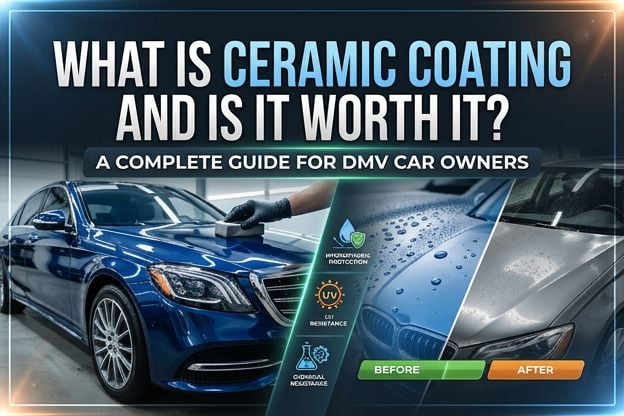
Ceramic coating is a liquid polymer that is applied to the exterior of a vehicle. Most professional-grade versions are silicon dioxide (SiO2) based. Once it is applied, it hardens and forms a transparent protective layer. The layer becomes part of the surface of the vehicle, rather than just sitting on top of it. This is a key factor in its durability and performance.
How the Liquid Polymer Bond Works
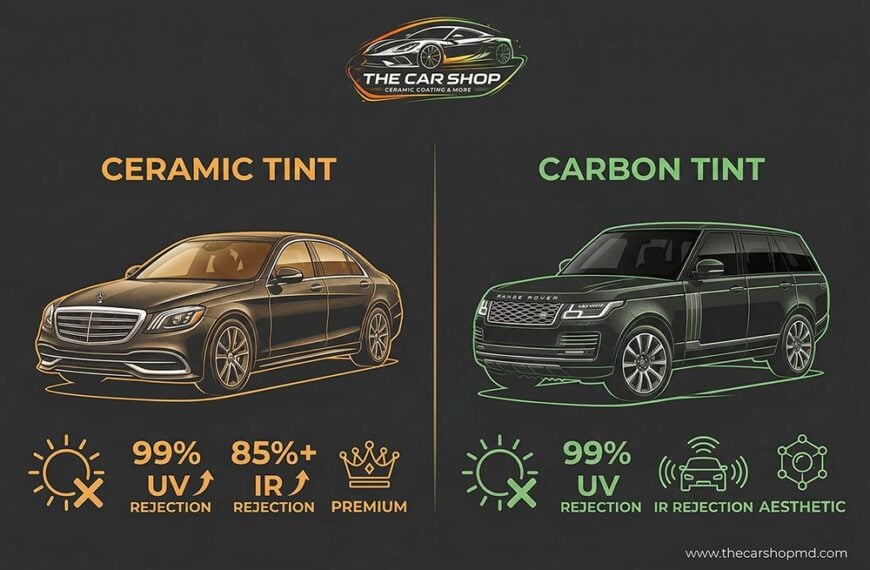
When a professional applies ceramic coating, the SiO2 molecules fill the tiny pores and flaws in your clear coat and chemically bond with the paint surface underneath. This creates a layer that is tougher than your factory clear coat, highly resistant to chemical contamination, and molecularly hydrophobic. This isn’t a coating that washes away in the rain — it’s one that uses rain to clean itself. For those curious about other protective measures, you might want to explore the differences between ceramic tint and carbon tint.
Comparing Ceramic Coating to Wax and Paint Sealants
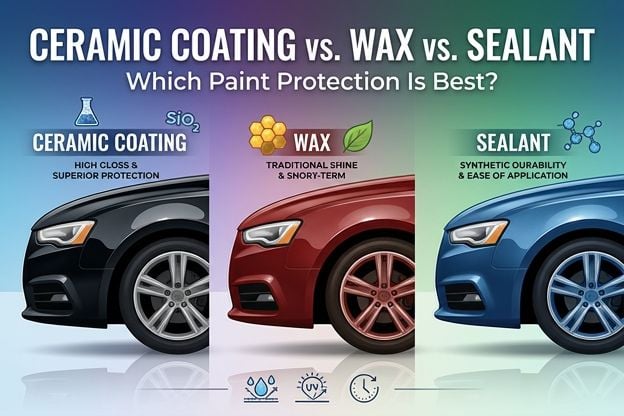
Wax forms a thin, temporary shield by sitting on top of the paint surface. It looks great when fresh but quickly breaks down under heat, UV exposure, and washing. Paint sealants are a synthetic upgrade from wax — they last longer (typically 3–6 months) but still don’t bond at the chemical level. In contrast, ceramic coating becomes one with the surface and is measured in years, not months. A professionally applied coating at The Car Shop comes with protection plans of 3 years or 5 years, backed by IICRC-certified application standards.
The Biggest Misconception: Ceramic Coating Is Not Scratch-Proof
Here’s the most important thing to understand before you invest. Ceramic coating adds hardness and resistance to light surface contamination — it will shrug off bird droppings, tree sap, and minor chemical exposure that would etch unprotected paint. But it is not a physical impact barrier. Rock chips, deep scratches, and swirl marks from improper washing can still damage a coated surface. If physical impact protection is your primary concern, Paint Protection Film (PPF) — either on its own or paired with ceramic coating — is the more appropriate solution.
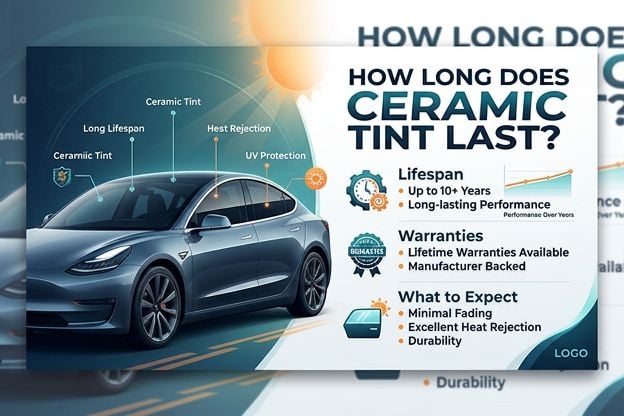
Consider ceramic coating as a shield against environmental factors and PPF as a shield against physical harm. Many car enthusiasts use both for maximum protection. If you’re curious about the longevity of such protective measures, you might also be interested in learning how long ceramic tint lasts.
Why DMV Drivers Love Ceramic Coating
So, why all the hype about ceramic coating? Well, it’s not just a sales pitch. The benefits are real and come from the layer of hydrophobic, UV-resistant chemical bonding that the coating forms on your vehicle’s surface over time.
- Prevents paint oxidation and color fading by blocking UV rays
- Keeps water, road salt, and chemical contaminants from sticking
- Decreases the amount and effort of maintenance washing needed
- Creates a gloss and color depth that wax can’t match
- Preserves the exterior condition over years to protect resale value
- Protects against etching from bird droppings, tree sap, and acid rain
These benefits increase over time. The longer a ceramic coating is properly maintained, the more noticeable the difference between a coated vehicle and an uncoated one parked in the same conditions. DMV drivers who ceramic coat a vehicle in year one and maintain it correctly often find the paint looks better in year three than a comparable uncoated vehicle does after six months. For those considering different options, understanding the differences between ceramic and carbon tint can also be beneficial.
1. Protecting Against UV and Oxidation During the DMV’s Harsh Summers
Summers in Maryland frequently reach over 95°F with high humidity, and the UV index readings in the DC metro area are some of the highest in the Mid-Atlantic from June to August. This continuous exposure to UV rays breaks down the clear coat on a molecular level, which results in the chalky, faded appearance seen on older vehicles with neglected paint jobs. The SiO2 layer in ceramic coating acts as a UV filter, significantly slowing down this degradation process and maintaining the vivid color and clear coat of your vehicle. If you’re interested in additional protection, you might also consider window tinting options that adhere to local regulations.
2. A Hydrophobic Surface That Keeps Road Salt and Rain at Bay
From November through March, Maryland and Virginia DOT crews are liberal in their application of road salt on major DMV arteries like I-270 and Route 50. This salt doesn’t just affect the undercarriage of your car. It also splashes up onto painted surfaces and speeds up oxidation wherever it comes into contact with unprotected paint. A ceramic-coated surface is highly hydrophobic. This means that water — and the salt, grit, and contaminants it carries — beads up and rolls off instead of sitting and soaking in. This is one of the most practical and underappreciated benefits for DMV drivers specifically.
3. Enhanced Gloss and Color Clarity That Lasts for Years
It’s difficult to explain the visual impact of a correctly applied ceramic coating until you’ve seen it firsthand. Colors seem richer, reflections are more defined, and the surface has a three-dimensional clarity that wax can’t match. But this isn’t just about looks — the gloss you’re seeing indicates that the surface is smooth, sealed, and devoid of the microscopic impurities that scatter light and dull paint. With the right maintenance, this level of finish can last for years, not just a few weeks after application. For more information on longevity, learn about how long ceramic coatings last.
4. Less Effort Required to Keep Your Car Clean
With a ceramic coating, your car’s surface becomes hydrophobic and resistant to contamination bonding. This means dirt and grime will have a harder time sticking to your car. As a result, you’ll spend less time, less product, and see better results when you wash your car. Plus, you won’t have to scrub — you’ll just rinse. If you live in the DC metro area and drive daily, you’ll likely encounter construction dust, pollen, and urban grime all year round. A ceramic coating can help reduce the effort it takes to wash your car and the risk of wash-induced swirl marks, making it a worthwhile consideration.
5. Enhanced Resale Value with a Well-Maintained Exterior
When it comes to reselling your vehicle, the exterior condition is one of the first things a potential buyer will look at, whether in person or in photos. If your paintwork is faded, oxidized or has years of water spot etching, it shows the car has been neglected and this will be reflected in the resale or trade-in price. A ceramic coating helps to maintain the condition of your paintwork, showing that the car has been well cared for. This perception can translate into real money when it comes time to sell or trade in your vehicle.
For DMV car owners, this is particularly important. The used car market is competitive and buyers are picky. A car with ceramic coating, a well-documented maintenance history, and paint that looks almost new will always attract more interest and command a higher price than a similar car with noticeably worn paint.
Which is Best for You: Ceramic Coating, Wax, or PPF?
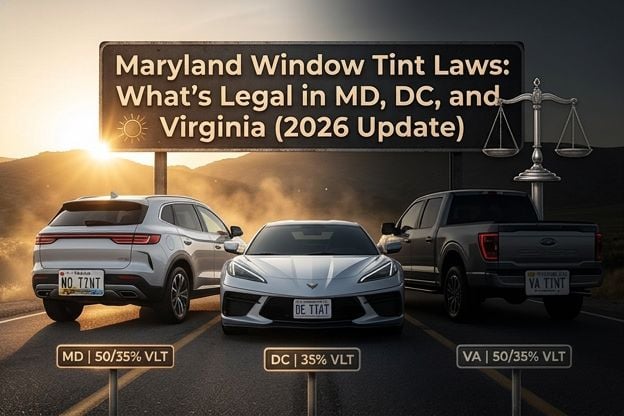
There’s no one-size-fits-all answer to this question. It all comes down to how you use your car, what your budget is, and how much protection you want. Each option provides a different level of protection. Knowing the strengths and weaknesses of each one can help you make an informed decision without spending too much money or leaving your car unprotected. For those considering tint options, understanding the Maryland window tint laws is also crucial.
When to Use Wax (and When Not To)
If you’re on a budget, planning to sell your car soon, or just want to spruce up your car for a show or event, wax is a good option. A good carnauba wax, when applied properly, can give your car a warm, deep shine and offer some protection against minor contaminants. It’s a good choice for the casual weekend driver who doesn’t mind reapplying it every 6–8 weeks.
Wax, while useful, lacks in durability and protection. It can’t stand up to the UV rays and heat that are a constant in DMV summers. It doesn’t protect against bird droppings or tree sap, and it won’t last through the road salt that Maryland and Virginia drivers have to deal with from November to March. If your vehicle is outside every day and exposed to the elements, wax is a band-aid, not a solution.
The Superior Longevity of Ceramic Coating Over Wax
When you look at the bigger picture, there’s no competition. One professional ceramic coating treatment at The Car Shop lasts longer than countless wax treatments, offers significantly better protection against chemicals and UV rays, and achieves a degree of water repellency that wax can’t match. Considering the time, product expense, and work that goes into regular waxing, the initial cost of ceramic coating usually pays for itself within the first year.
Why You Should Use Ceramic Coating and Paint Protection Film Together
For those who want the best protection possible, the recommended strategy is to use both Paint Protection Film (PPF) and ceramic coating. PPF, which is available at The Car Shop in 3M and Expel varieties, provides a self-healing physical barrier that protects against rock chips, road debris, and deep scratches. Ceramic coating, when applied over PPF, adds a hydrophobic and UV-resistant layer on top. The two products protect against different types of threats and are more effective when used together than when used separately.
- PPF absorbs physical damage — rock chips, gravel strikes, and abrasion
- Ceramic coating absorbs environmental damage — UV rays, chemical etching, and contamination
- Combined, they protect your paint from virtually every real-world danger a DMV driver faces
- The combination is especially recommended for front fascias, hoods, and side mirrors where road debris impact is highest
The most common setup is full or partial PPF on high-impact zones — the hood, front bumper, fenders, and mirror caps — with a full-vehicle ceramic coating applied over the top. This gives you layered, complementary protection without coating the entire vehicle in the more expensive film.
Depending on your budget, you may have to choose between the two. For those who commute daily on I-95 or I-270 and accumulate a lot of mileage and are consistently exposed to rock chips, it’s a good idea to prioritize PPF in high-impact areas. If you’re mainly concerned with environmental paint damage such as UV fading, water spots, and salt contamination, and you want long-term, low-maintenance protection, ceramic coating should be your top priority. Many customers at The Car Shop start with one and then add the other as their budget allows.
Check out the variety of ceramic coating options and costs at The Car Shop to find the protection that suits both your car and your wallet.
What Every DMV Driver Should Know Before Applying Ceramic Coating
Applying ceramic coating isn’t as simple as washing your car. It’s a process that requires preparation, the right timing, and the right conditions to cure properly. Knowing what goes into a professional application can help you set realistic expectations and avoid the pitfalls that can lead to subpar results. Additionally, if you’re considering window tinting alongside ceramic coating, it’s important to be aware of Maryland window tint laws to ensure compliance.
The most crucial factor in a ceramic coating job isn’t the product itself — it’s the surface preparation that occurs before the coating even comes into contact with your paint. This step is often skipped or rushed, which is the most frequent reason a coating doesn’t perform as expected.
Why You Need to Correct the Paint Before Anything Else
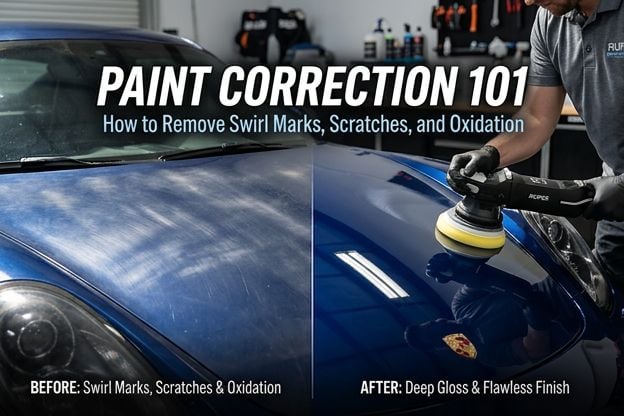
Ceramic coating won’t cover up any paint defects. In fact, it will seal them in. Any swirl marks, light scratches, oxidation, or water spot etching that are on the surface when you apply the coating will be sealed in and visible for years. That’s why professional paint correction is an essential first step in any good ceramic coating process. At The Car Shop, IICRC-certified technicians will assess the condition of your paint before any coating work begins. They’ll do the appropriate level of correction to make sure the surface is perfect before they apply the coating.
How Road Salt Season in Maryland Impacts Your Coating Timeline
When you’re considering getting a ceramic coating before winter, it’s important to think about the timing. Road salt starts to show up on DMV roads as early as the end of October and can last until March. If you get a coating right before the heavy salt season, your new coating will immediately start protecting against one of the most damaging substances your paint will face all year. Ideally, you want the coating to be fully cured, which usually takes about 2-4 weeks depending on the temperature and humidity, before the salt exposure starts to be consistent. The end of September through October is a good time frame for DMV drivers to consider.
When’s the Best Time to Get Ceramic Coating in DC, Maryland, and Virginia?
Spring and early fall are the most ideal times to apply ceramic coating in the DMV. The best conditions for curing are temperatures between 60°F and 80°F with moderate humidity. The extreme heat in July and August can interfere with the application process, and the very cold temperatures in January and February can significantly slow down curing. If you’re planning ahead, schedule your appointment in April, May, September, or October to give your coating the best start. Plus, you’ll be ready for either the peak UV season or the road salt season, depending on the time of year.
Why The Car Shop Is the Ideal Place for Ceramic Coating in Laurel, MD
The difference between a ceramic coating applied by a certified professional on a properly prepped surface and one that’s been rushed through without paint correction or quality control is noticeable. The difference becomes apparent within the first year — in the coating’s performance, its longevity, and whether it actually provides the protection you paid for. At The Car Shop, every coating job is performed by IICRC-certified technicians who follow a documented preparation and application process. This is backed by protection plans of 3 years or 5 years and all-inclusive pricing with no hidden fees.
Application by IICRC-Certified Technicians and Warranty Options of 3 or 5 Years
The Car Shop’s ceramic coating is applied by technicians certified by the IICRC, which sets the standards for professional detailing and surface protection across North America. This certification isn’t just a piece of paper. It means that the person working on your car has a deep understanding of paint chemistry, surface preparation, and application conditions, not just someone who has watched a few how-to videos. The end result is a coating that bonds properly, cures fully, and performs as it was intended. For more information on the lifespan and warranties of ceramic products, check out how long ceramic tint lasts.
There are two levels of protection available: a 3-year plan for those who want high-quality protection with a specific coverage period, and a 5-year plan for those who want the longest possible protection for their vehicle’s exterior. Both plans come with a warranty that reflects The Car Shop’s confidence in the quality of the application — and both are priced all-inclusive, covering product and labor with no unexpected charges at the end.
Clear, All-Inclusive Pricing
At The Car Shop, there are no surprises when it comes to pricing. One of the things that annoys drivers the most about car services is the difference between the price they were initially quoted and the final bill. The Car Shop’s pricing includes everything — the price you’re quoted is the price you pay. There are no extra charges for the consultation on paint preparation, surface evaluation, or inspection after application. Both parts and labor are included in the cost, ensuring transparency and peace of mind for all customers. If you’re curious about other services, you can also learn about ceramic tint vs carbon tint options available at The Car Shop.
We believe in honesty, so we’ll tell you what your vehicle needs before we start working on it. Often, a vehicle’s paint needs to be corrected before we can apply a coating. We’ll explain what that means and why it’s necessary, and we’ll give you a clear price before we start working. We won’t try to sell you anything you don’t need, and we won’t pressure you into making a decision. We just want to give you all the information you need to make the best decision for your vehicle. If you’re considering window tinting, you might want to explore the differences between ceramic tint and carbon tint to find the right option for your vehicle.
Conveniently Located for DC, Maryland, and Northern Virginia
You can find The Car Shop at 10075B N 2nd St in Laurel, MD, a location that is convenient for all DMV residents. Whether you live in DC, the Maryland suburbs, or Northern Virginia, Laurel is a short drive away from most major roads, including I-95, the Baltimore-Washington Parkway, and Route 1. We have customers who come from Alexandria, Arlington, Bethesda, Silver Spring, Bowie, and Annapolis for ceramic coating, PPF, window tinting, and full detailing services. They all agree the drive is worth it, and many of them keep coming back.
Schedule Your Ceramic Coating Appointment at The Car Shop
Tired of constantly trying to preserve your car’s paint with waxing? Schedule your ceramic coating appointment at The Car Shop — visit thecarshopmd.com/book-now or call (240) 929-7704. Walk-ins are accepted when space permits, and the team is always ready to help you determine which protection plan is best for your vehicle before you make a decision.
Common Questions About Ceramic Coating
Here are the questions DMV drivers usually ask before they schedule a ceramic coating appointment. If you can’t find your question here, you can call The Car Shop at (240) 929-7704 — the team is ready to talk about your specific vehicle and situation.
What is the lifespan of ceramic coating on cars in the DMV area?
In the DMV area, a ceramic coating applied by a professional usually lasts between 3 and 5 years. This depends on the protection plan you choose, the quality of the application, and how well you maintain the coating in between professional visits. The Car Shop provides a 3-year and a 5-year protection plan. Both are applied by technicians certified by the IICRC to guarantee that the coating bonds and cures correctly from the start.
Conditions specific to the DMV area — intense UV exposure during the summer and road salt during the winter — certainly give ceramic coatings a run for their money compared to milder climates. However, with the right upkeep using ceramic-safe washing products and regular booster applications, you can prolong the effectiveness of your coating and ensure its hydrophobic and protective properties are at their best for the duration of the coverage period.
Can ceramic coating stop scratches and rock chips from happening?
Unfortunately, ceramic coating does not have the power to stop scratches or rock chips from occurring. While it does add a certain level of hardness to the clear coat of your vehicle and it is highly resistant to chemical etching, UV degradation, and contamination from the environment, it is not a physical barrier against impact. Even if a surface is coated in ceramic, it can still be scratched if it is washed improperly, if someone keys it, or if it is hit by debris on the road.
For those who are most concerned about physical impacts – especially for those commuting on I-95 or I-270 who are regularly exposed to rock chips – Paint Protection Film (PPF) in either 3M or Expel is the right product. It can be used alone or layered under a ceramic coating for full protection. The team at The Car Shop can help you figure out the right combination for your vehicle and your daily driving conditions. For more insights, you might want to check out this discussion on ceramic coating benefits.
Is paint correction necessary prior to ceramic coating?
Indeed, paint correction is not an optional step prior to ceramic coating if you want the coating to look and function properly. Ceramic coating adheres to the surface it is applied to, so any existing swirl marks, minor scratches, oxidation, or water spot etching will be sealed in under the coating and remain visible for the duration of the product’s life. At The Car Shop, we start every ceramic coating appointment with a comprehensive paint condition evaluation, and the necessary level of correction is carried out before any coating is applied. This step is what distinguishes a coating job that looks fantastic for years from one that is a letdown from the beginning.
Is it worth it to get ceramic coating for a daily driver in Maryland or Virginia?
For a daily driver in the DMV, ceramic coating is one of the most practical protective investments you can make — arguably more so than for a weekend car that spends most of its time in a garage. Daily drivers face the full spectrum of DMV paint threats: UV exposure during summer commutes, road salt and chemical spray from November through March, urban grime and construction dust, and the cumulative effect of frequent washing. Ceramic coating addresses all of these continuously, not just for a few weeks after application.
Just by reducing the amount of time and money you spend on maintaining your car — fewer car washes, less money spent on cleaning products, and a lower risk of getting swirl marks from washing — a ceramic coating is a practical solution. If you drive your car every day and plan to keep it for three or more years, the return on your investment in a ceramic coating is clear and measurable, both in terms of the condition of your car’s paint and the time you save on maintenance.
What is the price range for ceramic coating at The Car Shop in Laurel, MD?
The cost of ceramic coating at The Car Shop is dependent on the size of the vehicle, the condition of the paint, and the protection plan chosen, either the 3-year or the 5-year plan. The price is all-inclusive, with no hidden fees or additional charges after the work is completed. For more insights, you can explore whether ceramic coating is worth the investment.
Since the process often requires paint correction before the coating can be applied — and the level of correction is contingent on the condition of your vehicle’s paint — the most accurate pricing is determined through a direct consultation. The team at The Car Shop will evaluate your vehicle, guide you through the necessary steps, and provide you with a comprehensive quote before any work commences.
For the most recent pricing and package information, visit thecarshopmd.com/services/paint-correction-ceramic-coating/ or call (240) 929-7704 to speak directly with a technician. You can also check out The Car Shop Learning Center for more guides on paint protection, detailing, and automotive customization throughout the DMV. For insights into whether ceramic coating is worth it, you might find this Quora discussion helpful.
If you’re in the DMV and need professional ceramic coating, PPF, window tinting, or a full automotive customization, look no further than The Car Shop. We’re located at 10075B N 2nd St, Laurel, MD 20723 and serve drivers across DC, Maryland, and Virginia. We pride ourselves on our certified craftsmanship and transparent pricing on every service we offer. For those interested in window tinting, you might want to check out the Maryland window tint laws to ensure compliance.

 By
By